
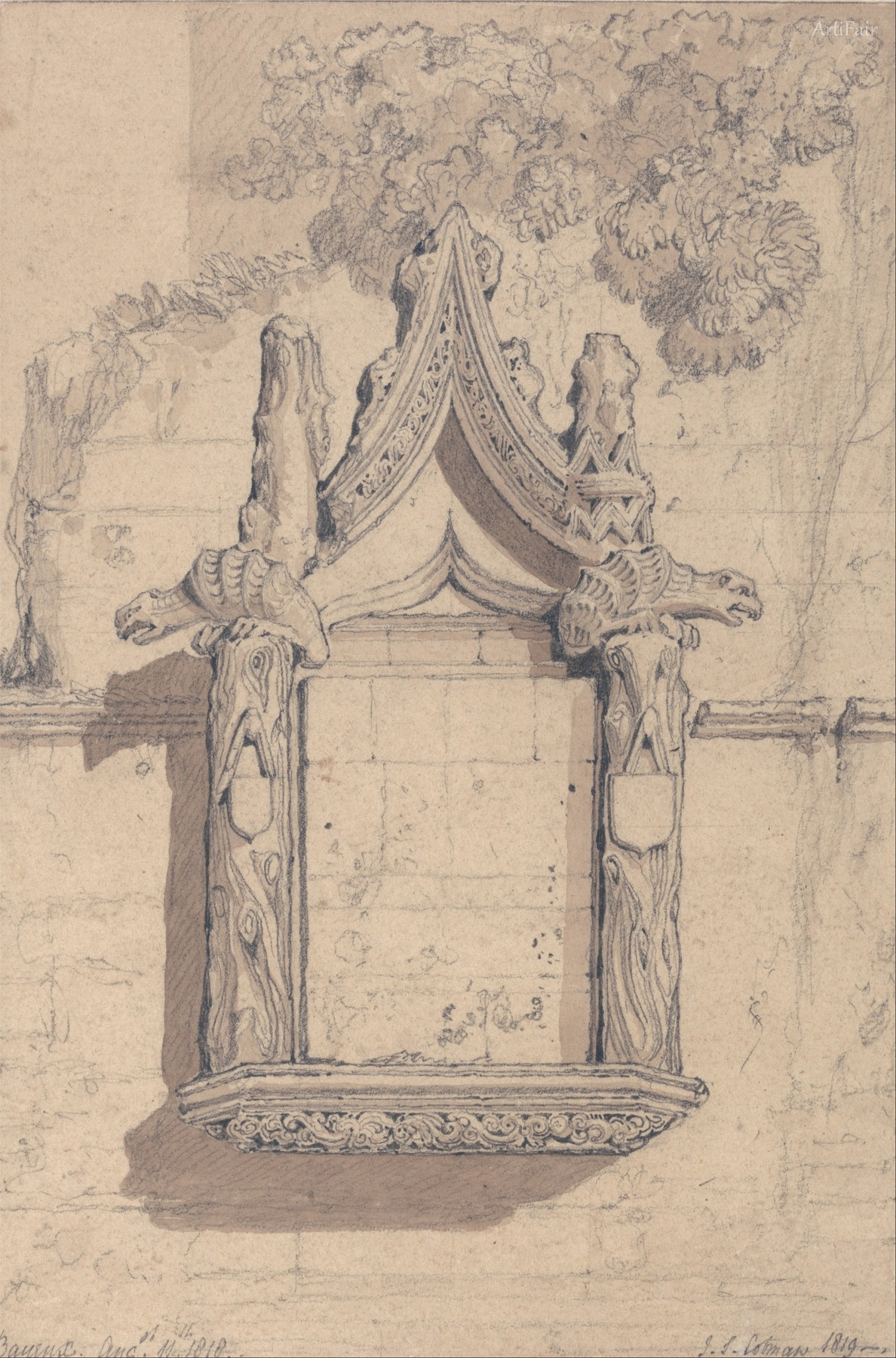
Sculpture upon a House on the North Side of the Cathedral at Bayeux
Category:
Created:
Date unknown
Likes:
0
Dimensions:
Download:
New users get 4 free credits. 2K costs 1 credit; 4K and Ultra HD are priced by resolution. Public domain artworks can be used commercially.
Public domain download summary
This artwork is provided as a public domain image resource. The 2K file costs 1 credit for everyday creative work, while 4K and Ultra HD files are priced by resolution.
Art Appreciation
This delicate drawing captures an intricate architectural fragment, portraying a richly carved frame that evokes a sense of history and craftsmanship. The emphasis on the frame's ornate details—especially the figures resembling mythological creatures at the sides—draws the viewer into a narrative of art and architecture. The careful shading creates a lifelike quality, enhancing the dimensionality, while the light, almost sepia-toned background suggests an ancient setting, allowing the ornate frame to take center stage. It feels almost as if this piece is inviting you to step into a bygone era; the craftsmanship speaks of a time when art and utility were interconnected.
As my eyes travel across the frame, I find myself imagining the local artisans toiling away, chiseling each delicate vine and dragon-like creature, infusing their emotions into the stone. The meticulous attention to detail makes this drawing not just an artistic representation, but a reverent homage to architectural beauty. The choice of color—soft browns and subtle contrasts—imbues the work with a timeless quality, whispering stories of the past, while subtly reminding us of the enduring nature of skilled craftsmanship. This drawing stands as a testament to the artist's ability to encapsulate not only form but also historical essence.