Summer sale: 40% off all productsUse code SUMMER40Ends July 31Shop credits
Back to gallery
Loom

Art Appreciation

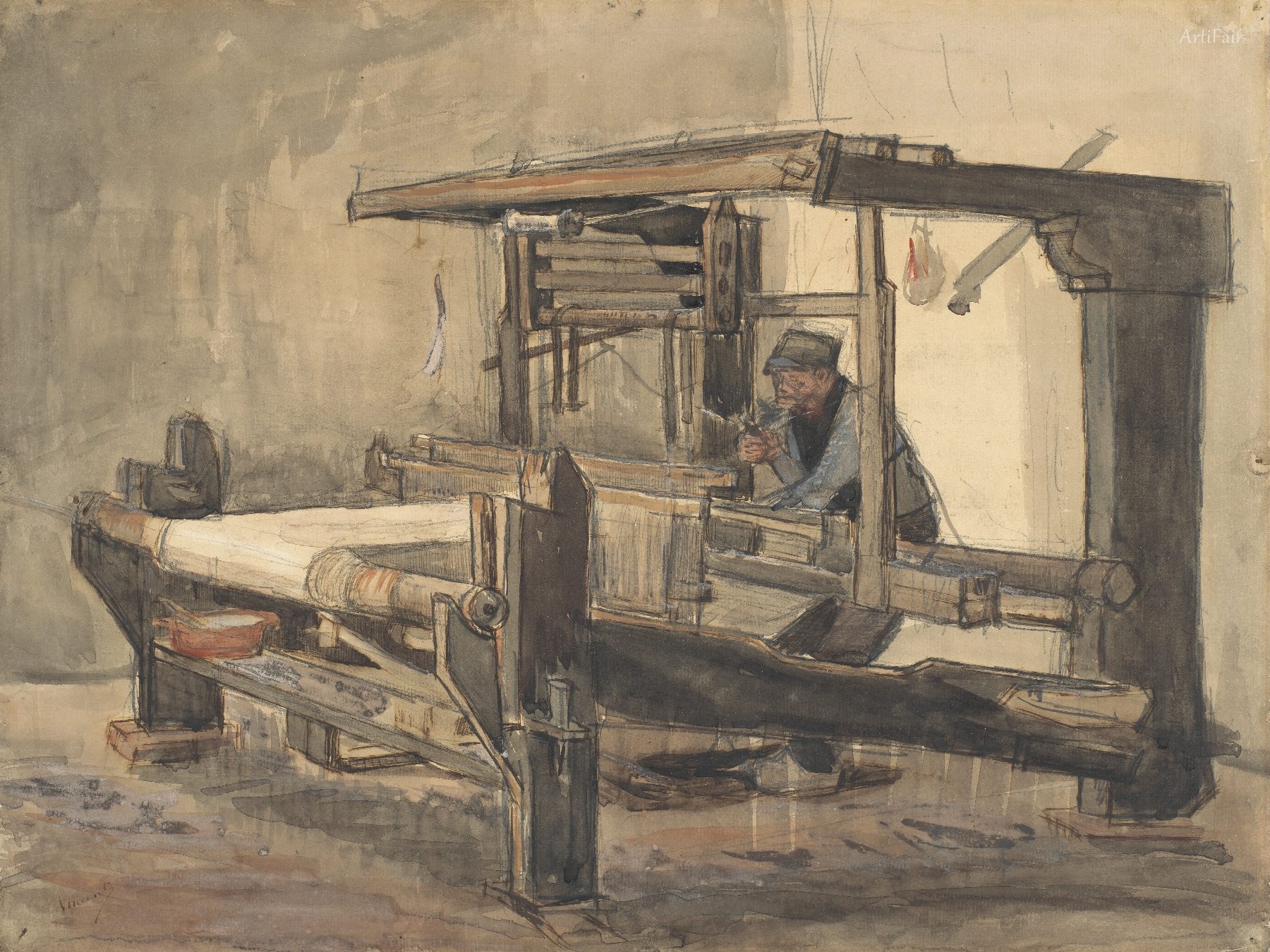
In this evocative depiction, a weaver sits with unwavering concentration at a loom, a staple of industrious life during the late 19th century. The composition pulls you in, establishing a warm, intimate connection between the worker and his craft. The loom, robust and commanding, is rendered with intricate detail, harmoniously showcasing the layers of wood and metal. The soft, muted color palette — earthy browns, gentle ochres, and cool blues — enhances the sense of a quiet workshop scene, enveloping the viewer in a tranquil ambiance filled with the spirit of labor.

As you gaze upon this artwork, you can almost hear the rhythmic clatter of the loom, a sound that has echoed through time in workshops like this. The subdued lighting lends a modest glow to the scene, drawing attention to the weaver's focused expression, a tribute to the skill and perseverance woven into every fabric and thread. In the historical context of Van Gogh's career, this piece serves as a bridge between his early inspirations and the deep appreciation for the working class that would inform much of his later work, making it not just an artistic achievement, but a poignant cultural artifact.

Loom

Vincent van Gogh

Category:

Created:

1883

Likes:

0

Dimensions:

1800 × 1349 px

Download:

2K downloads are free. 4K and Ultra HD files use credits. Public domain artworks can be used for commercial projects.

Public domain download summary

This artwork is provided as a public domain image resource. You can use the free 2K file for everyday creative work, while 4K and Ultra HD files are available with credits.

Related artworks

Avenue at Arles with houses
Portrait of Michel Monet
Who would have thought!
Farmhouse and Laboring Women
The Duchess of Abrantes
Portrait of an old man with top-hat
Country road near Loosduinen
The Victorious Hannibal Seeing Italy from the Alps for the First Time
Anna Amiet in the Flower Garden 1910
Portrait of Jacques Seligmann