Back to gallery
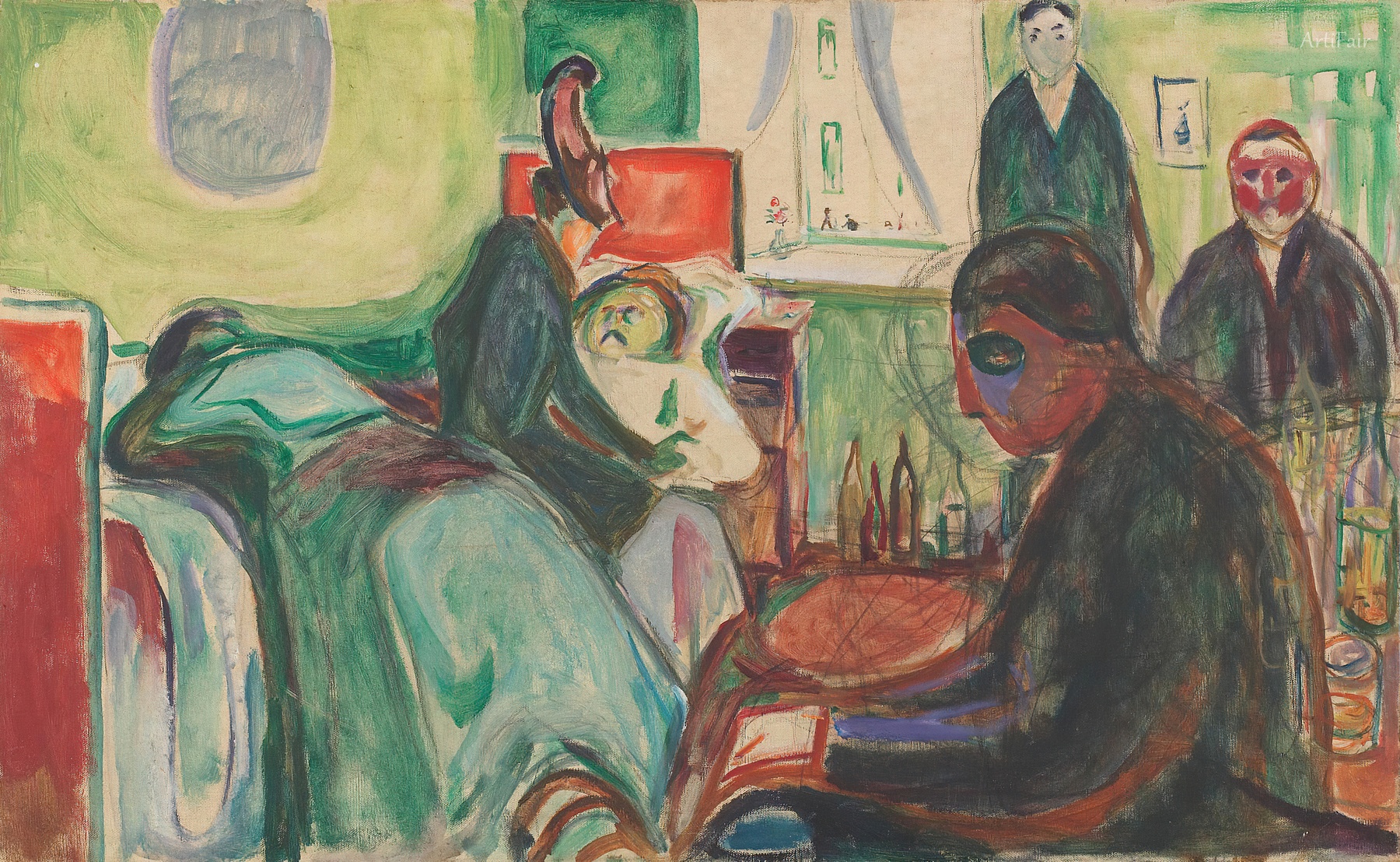
The Death of the Bohemian

Art Appreciation

In this evocative piece, we are transported into an intimate yet unsettling moment, where a sense of urgency permeates the air. The figures are arranged with purpose; in the foreground, a figure with a shadowy face is deeply engaged in reading while virtually hovering over another, presumably ill, individual resting on the bed. The position of the reclining person, almost sprawled, captures a fragility that resonates throughout the canvas. This contrast between the calm of one character and the implicit tension of the other invites a narrative interpretation that weighs heavily on the viewer's heart. It's as if time holds its breath in this poignant scenario.

Munch’s brushwork is both expressive and raw, conveying emotion through vibrant strokes that pulse with color. The color palette, dominated by greens and reds, evokes a sense of unease and intimacy simultaneously. The swirls and squeezes of paint mirror the distress faced by those depicted; the greens of the room create a sterile backdrop, while the vivid red of the bed draws our focus, perhaps symbolizing pain or emotional turbulence. In this room, we feel the weight of human experience—loss, compassion, and the looming specter of mortality. The historical context of 1925—amidst the shadows of wars and personal strife—adds layers to this poignant portrayal, touching on themes of mental anguish and the human condition. Munch’s piece continues to resonate with viewers, cementing its significance in the canon of expressionist art.

The Death of the Bohemian

Edvard Munch

Category:

Created:

1925

Likes:

0

Dimensions:

3814 × 2348 px
1050 × 655 mm

Download:

Related artworks

The Lictors Bring to Brutus the Bodies of His Sons
John Wycliffe Taylor, at the age of five 1864
Portrait of four children from the second marriage of Paul Pavlovich Demidoff 1883
Portrait of Josefa de Castilla
Man with a top hat in his left hand
Portrait of a Woman with a Hat
Portrait of Armand Roulin
Chinese Official on Horseback
Christian Devleeschauwer 1876