
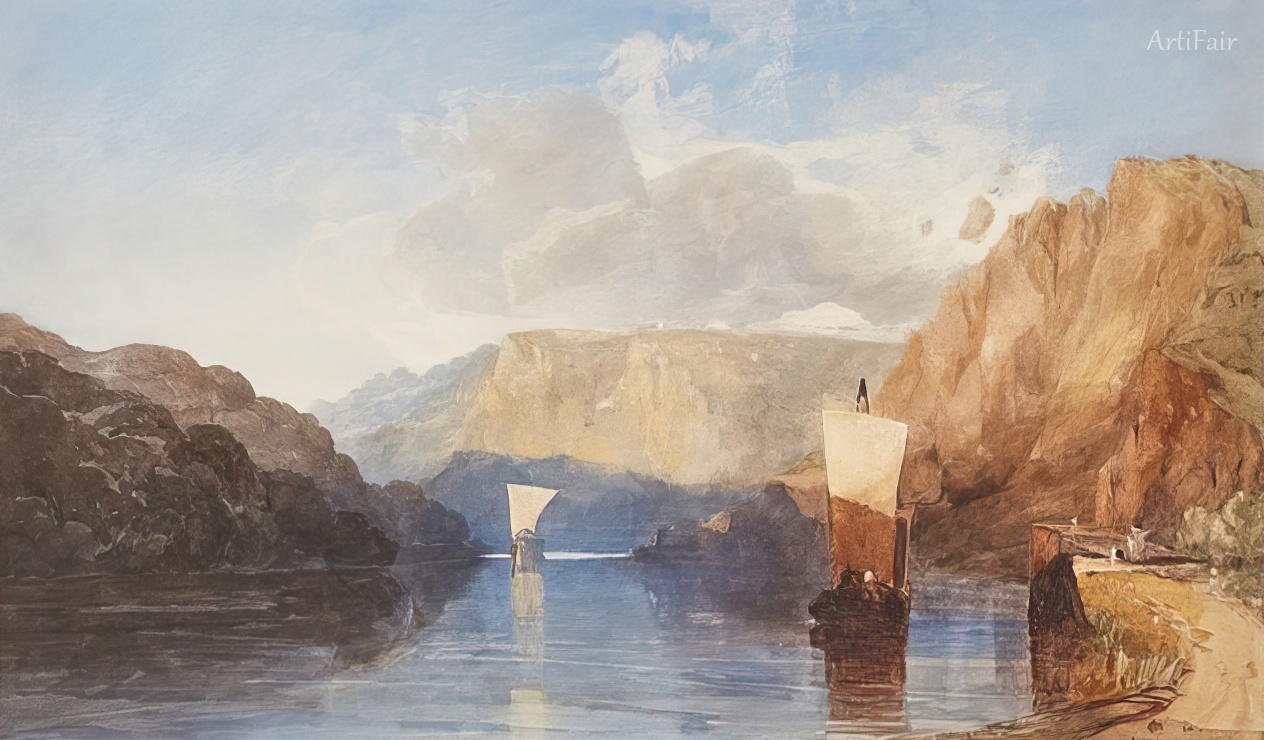
Blasting St. Vincent's Rock, Clifton
Category:
Created:
Date unknown
Likes:
0
Dimensions:
Download:
New users get 4 free credits. 2K costs 1 credit; 4K and Ultra HD are priced by resolution. Public domain artworks can be used commercially.
Dominant colors
Public domain download summary
This artwork is provided as a public domain image resource. The 2K file costs 1 credit for everyday creative work, while 4K and Ultra HD files are priced by resolution.
Art Appreciation
Blasting St Vincent's Rock, Clifton is a watercolour with touches of gum arabic and graphite on off-white paper by John Sell Cotman, made about 1830 and held by the Indianapolis Museum of Art at Newfields, which bought it in 1999.
Cotman, born in Norwich in 1782, was a leading member of the Norwich School of painters; after early years in London he returned to Norwich in 1806 and became president of the Norwich Society of Artists in 1811. The subject is said to have been suggested to him by his friend and patron the Reverend James Bulwer, a former drawing pupil, who became a curate in Bristol in 1831. The view looks along the Avon Gorge on the edge of Clifton, then a fashionable suburb of Bristol. A chunk of limestone is being blasted from the heights of St Vincent's Rock to prepare the ground for the Clifton Suspension Bridge; work on Isambard Kingdom Brunel's design began in 1831 but was soon halted, and the bridge was completed only in 1864. The picture is believed to be one of the last views from this popular vantage point, which was lost once building work started.
The museum's label stresses how a shaft of sunlight cuts across the gorge, separating the still blue water from the sun-struck cliff, while two sailing barges move on the river below. Unlike the older English practice of tinting drawings with watercolour, Cotman treated it as a painter's medium, laying in translucent blues and yellows broadly and boldly and pursuing what he called 'the art of leaving out'. The sheet measures about 34.3 by 57.8 cm.