Back to gallery
The Prisoner

Art Appreciation

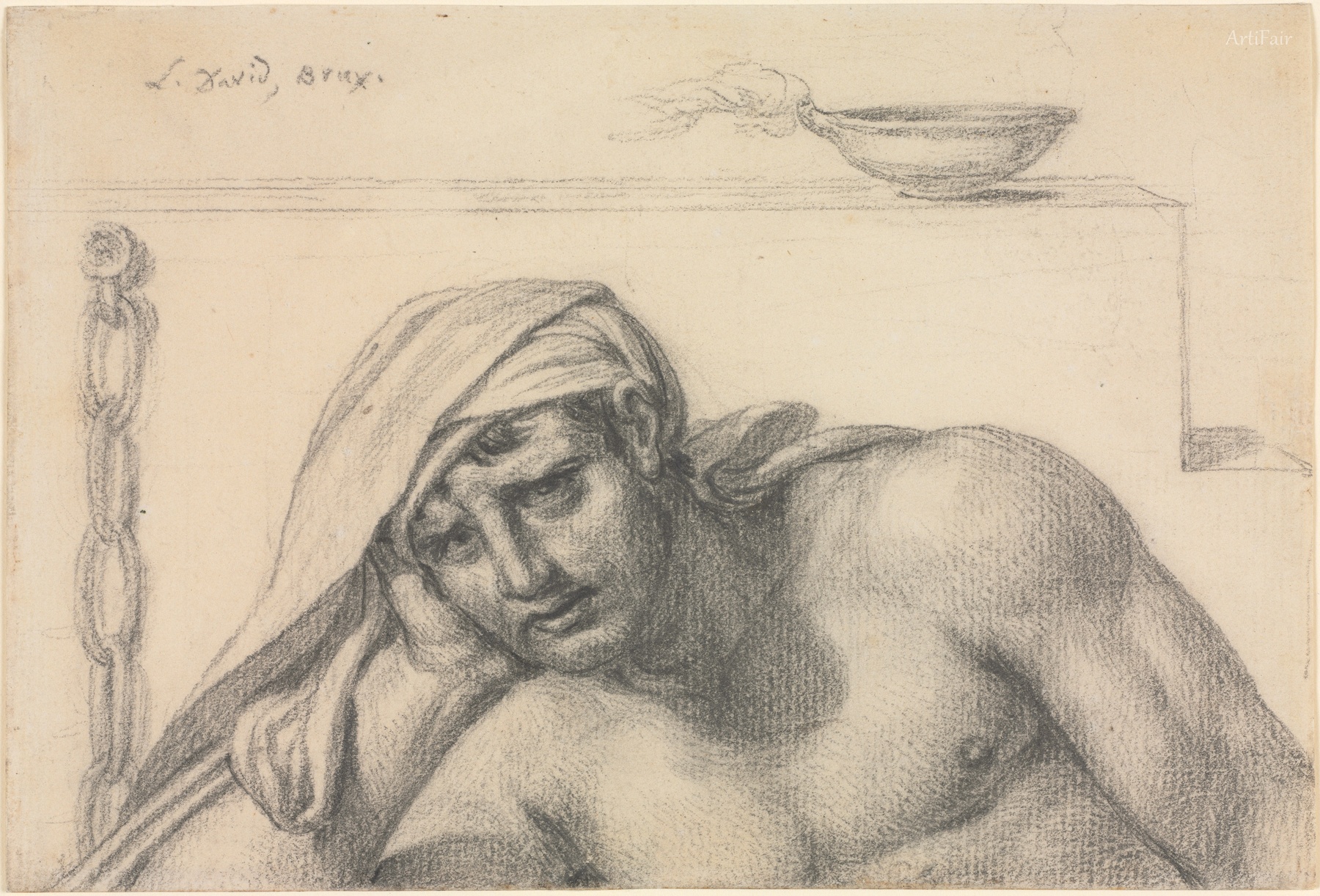
In this powerful drawing, the artist captures a deeply contemplative moment featuring a muscular figure, his head resting on one hand, a gesture that speaks volumes of his inner turmoil. The subject's expression is a complex blend of frustration and sadness, conveying the weight of some profound thought or possibly despair. A simple yet striking element, the bowl in the background, may symbolize nourishment, domesticity, or perhaps the stark contrast between sustenance and the figure's emotional state—creating layers of meaning that invite us to ponder the narrative hidden beneath the surface. The flowing lines and chiaroscuro technique reflect Jacques-Louis David's mastery of form, adding dimension and depth to the character's physique, making each muscle a testament to both the strength and vulnerability of the human condition.

Utilizing a subtle palette of gray and black tones, the artist emphasizes the figure's humanity and emotional intensity while the surrounding space feels void, amplifying the subject's isolation. This drawing, with its heightened emotional impact, not only showcases David's artistic prowess but also serves as a reflection of the tumultuous era from which it emerged. During the late 18th and early 19th centuries, artists sought to express human emotion and social commentary, and here, David succeeds in encapsulating the essence of struggle and contemplation. It’s as if the figure is not merely a subject but a mirror reflecting our own vulnerabilities and thoughts, drawing us into a contemplative state alongside him.

The Prisoner

Jacques-Louis David

Category:

Created:

1819

Likes:

0

Dimensions:

6395 × 4344 px

Download:

Related artworks

The Painter Johann Peter Flück at the Easel
The Departure of Marcus Attilius Regulus for Carthage 1785
Say, Are You Afraid Of Me 1918 喂,你怕我吗
Portrait of Luther Burbank
Ampelio, Old Fisherman of Bordighera
The Luncheon on the Grass
Riders on the Beach (II)
A Corner of the Apartment
Study for The Lictors Bringing Brutus the Bodies of his Sons