
Art Appreciation
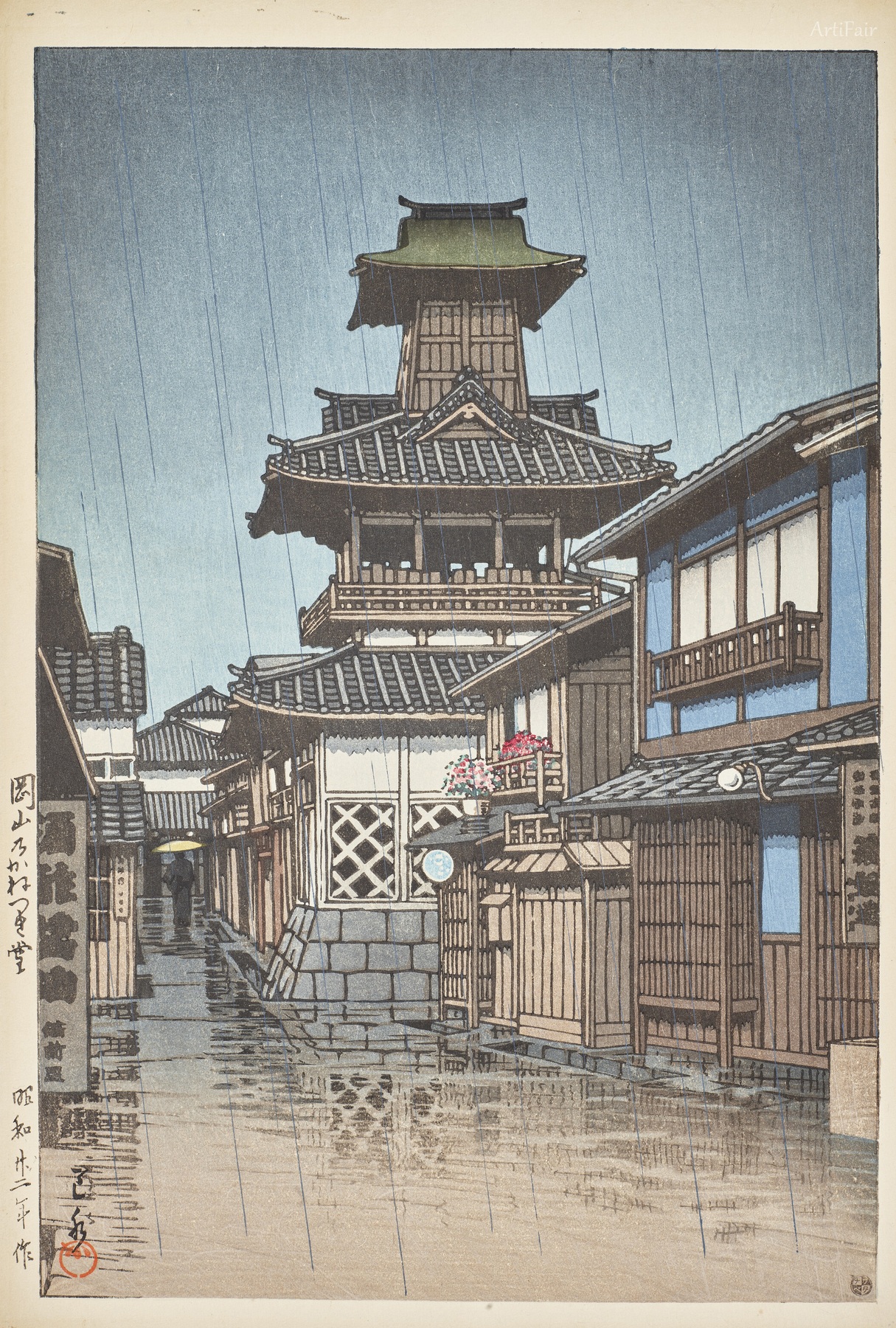
This captivating woodblock print depicts a traditional Japanese town street under a gentle rain, centering on a tall, layered clock tower with distinctive tiled roofing. The artist masterfully balances architectural detail with atmospheric depth, drawing the viewer's eyes up the towering structure while leading them through the wet cobbled street framed by wooden buildings. The use of subdued yet contrasting hues—cool blues for the sky and building shadows paired with earthy browns and greys for the wood and stone—evokes a serene, contemplative mood, as the rain slants softly across the scene, shimmering on the slick stone path and rooftops. Delicate reflections and the precise linear rain strokes add a dynamic quality, heightening the peaceful yet transient moment captured here.
The composition skillfully combines traditional Japanese architecture with the quiet urban stillness that only a gentle rain can bring, inviting an emotional resonance that blends nostalgia with a quiet appreciation for fleeting beauty. Created in the post-war era of 1947, this piece subtly reflects a yearning for calm and continuity amid change. The print is a testament to the enduring spirit of ukiyo-e art, capturing everyday urban landscapes with thoughtful realism and poetic sensitivity. The meticulous craftsmanship and refined aesthetic reveal the artist's deep respect for both place and moment, transporting the viewer into a quiet, rain-soaked street in historical Japan.
The Clock Tower of Okayama 1947
Hasui KawaseCategory:
Created:
1947
Likes:
0
Dimensions:
Download:
2K downloads are free. 4K and Ultra HD files use credits. Public domain artworks can be used for commercial projects.
Public domain download summary
This artwork is provided as a public domain image resource. You can use the free 2K file for everyday creative work, while 4K and Ultra HD files are available with credits.