Back to gallery
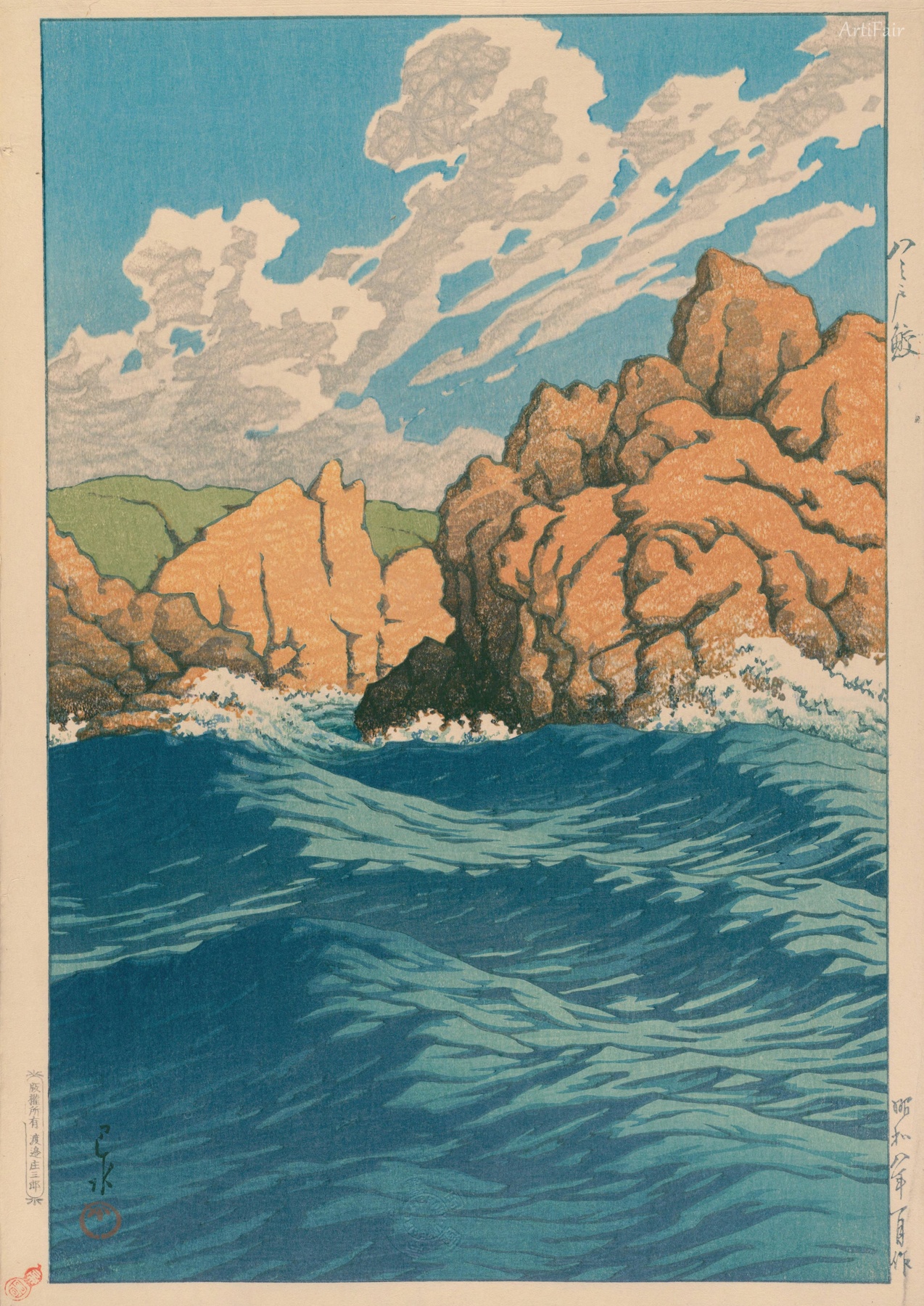
Hachinohe Sme 1933

Art Appreciation

This captivating artwork masterfully captures a dramatic coastal scene, where the bold, craggy rocks rise majestically above the turbulent waves of the sea. The artist’s distinctive Japanese woodblock technique shows immense finesse in the delicate layering of colors and textures—each stroke conveys a tactile quality of the rocky surface and the restless water. The swirling sea, rendered in deep blues and cool turquoise shades, contrasts vividly against the warm ochres and browns of the cliffs, creating a lively tension between earth and ocean. Wisps of clouds float across a brilliant blue sky, adding depth and a sense of atmospheric serenity despite the dynamic foreground.

The composition is balanced yet energetic; the jagged shapes of the rocks break up the horizon, guiding the eye from the frothing waves upwards toward the sky. This balance between movement and stillness invites the viewer to immerse fully in the coastal landscape's natural drama, evoking both calm and awe. Painted during the early 20th century, the work reflects the long tradition of ukiyo-e prints that celebrate Japan’s natural beauty, while the vivid, almost poetic portrayal reveals the artist’s deep reverence for the changing sea and land. This piece not only conveys geographical features but also stirs a powerful emotional response—a blend of nature’s raw force and delicate beauty intertwined.

Hachinohe Sme 1933

Hasui Kawase

Category:

Created:

1933

Likes:

0

Dimensions:

4486 × 6336 px

Download:

Related artworks

Rain on Tōkaidō at Hirisaka
Springtime Arashiyama from Kansai Series
Tokyo Twelve Views: Shinagawa Bay
Tokyo Twenty Views: Shin-Ohashi Bridge 1926
Akasaka Benkei Bridge
Travel Notes I (Souvenir from the Journey, First Collection) Kohama Horikawa 1920
Travel Notes III (Souvenirs of Travel Volume Three) Izumo Mihonoseki 1924
Karigasaka Mountain Pass 1927
Suruga Yui Town 1934
Travel Notes III (Osaka Kōzu, 1924)
Soshu Shichirigahama 1930
Nagasaki Shofukuji Temple
Collection of Japanese Landscapes: Shimabara and Kujukushima, 1922