Back to gallery
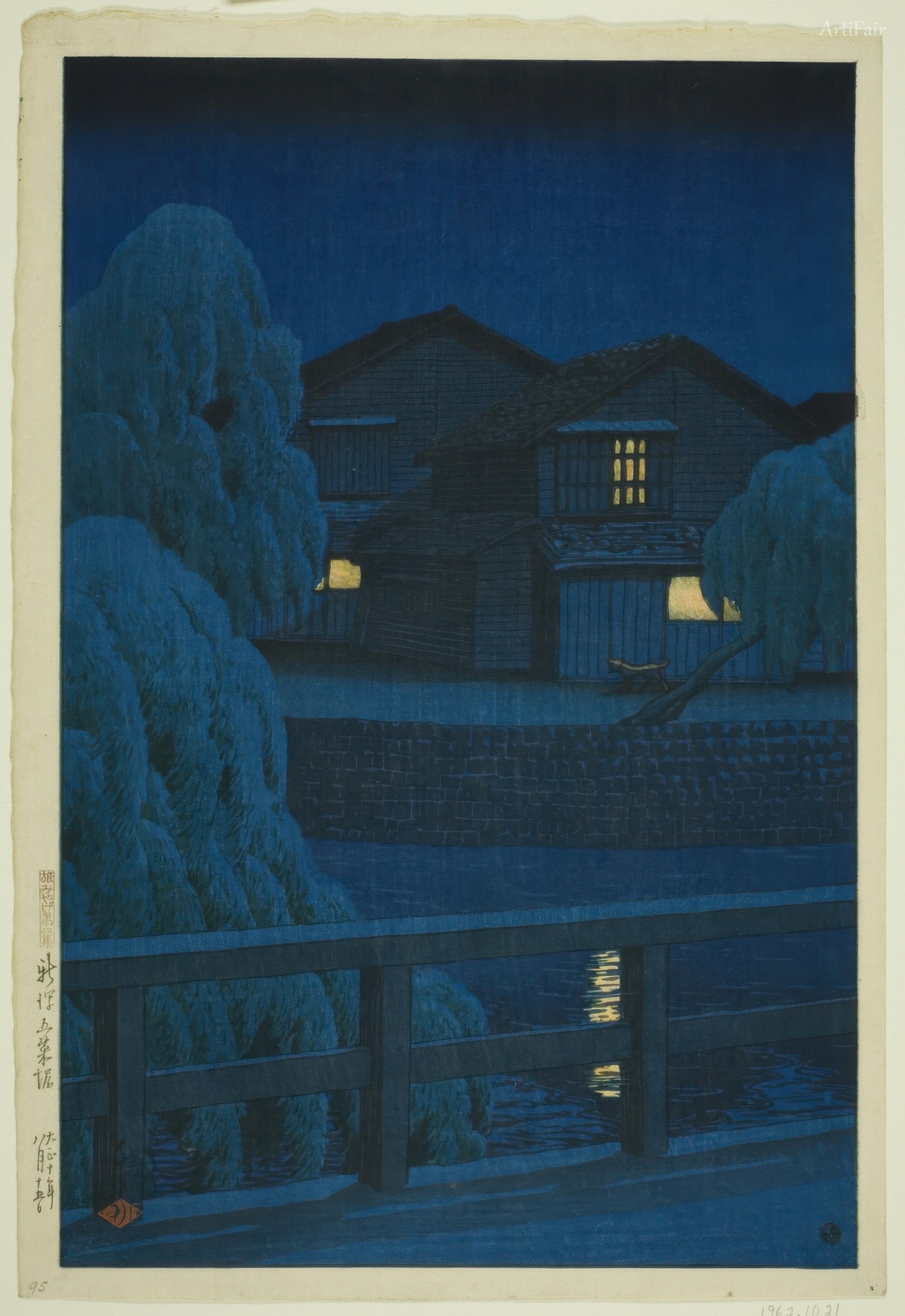
Travelogue II Niigata Gosaibori 1921

Art Appreciation

Bathed in the tranquility of a deep night, this scene captures an intimate urban riverside setting where the soft glow of warm interior lights spills from the windows of a quiet, unassuming wooden home. The shadows of willows drape gracefully over a still river, their delicate forms echoing the calm stream below. The wooden bridge in the foreground leads the eye gently across the composition, contrasting the richly textured bark and foliage with the smooth reflective water. The artist's masterful use of a limited palette—dominated by deep blues and muted blacks—sets a serene, contemplative mood, while the subtle hints of yellow in the lit windows invite warmth into the nocturnal cold.

The composition is carefully balanced with layered elements that evoke a peaceful, almost hushed narrative of everyday life paused in the stillness of night. With precision, the artist achieves a rhythmic harmony between the natural and built environment. This work is a prime example of shin-hanga movement aesthetics, combining traditional Japanese ukiyo-e techniques with influences of Western realism, resulting in a poetic meditation on light, shadow, and night. The piece beautifully reflects the early 20th century’s fascination with urban landscapes and seasonal atmosphere, making it not only a visual delight but a cultural artifact that bridges eras and artistic styles.

Travelogue II Niigata Gosaibori 1921

Hasui Kawase

Category:

Created:

1921

Likes:

0

Dimensions:

1686 × 2450 px

Download:

Related artworks

Night Cherry Blossoms of Koganei
Rain at Nikkō Shinkyō Bridge
Karigasaka Mountain Pass 1927
Kishu Taro Gorge, Kansai Series
Yoshida's Clear Sky After Snowfall 1944
Washington Monument and Potomac River 1935
Lake Kizaki in Shinshu 1941
Travel Notes I (First Collection of Travel Souvenirs) Kanazawa Asanogawa 1920
Travel Diary II: Morning at Doutonbori, Osaka
Night in Atami, View from the Abe Inn
View of Onsen-ga-take from Amakusa
Nagoya City, Zuizen Temple, 1932