Back to gallery
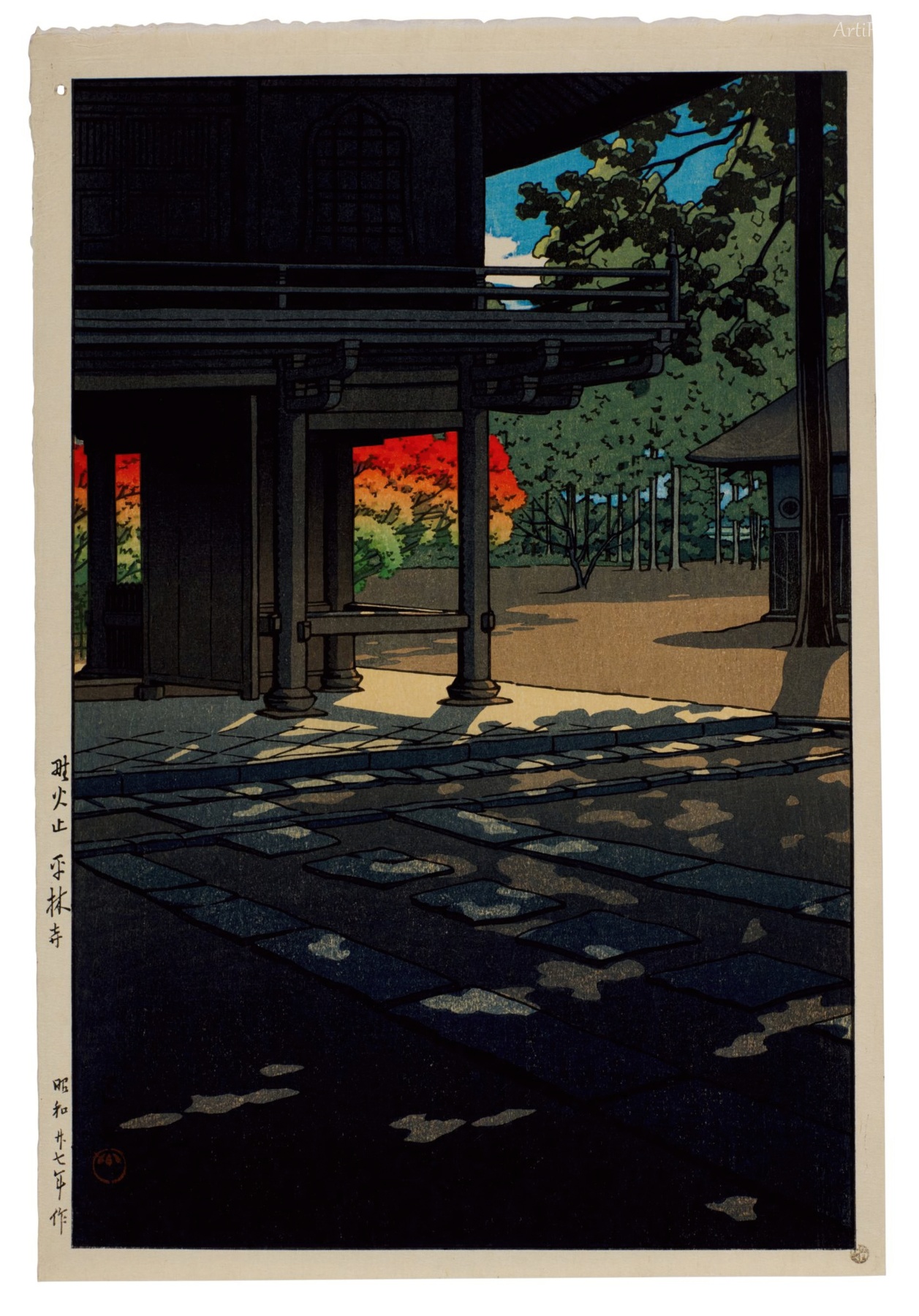
Nobidome Heirinji Temple 1952

Art Appreciation

This evocative woodblock print captures a tranquil moment at a temple courtyard during the late afternoon, where shadows stretch long and interplay delicately with patches of light filtering through the trees. The composition skillfully balances the dark silhouette of temple architecture in the foreground with the vibrant bursts of autumn foliage in the background. The play of light and shadow forms a rhythmic pattern on the stone pathway, inviting viewers to linger in its quietude. The overall color palette combines muted blues, dark browns, and vibrant reds and greens, embodying a harmonious blend of nature and structure with an undercurrent of serene contemplation.

Crafted in 1952 by a master of the shin-hanga movement, the technique here is meticulous and refined, exemplifying the traditional Japanese woodblock method infused with a modern sensitivity to natural light and atmosphere. Emotionally, the print evokes a peaceful, almost meditative stillness, as if time pauses for a breath within this sacred space. The seasonal colors hint at impermanence, resonating with deeper cultural themes of transience and reflection. This artwork stands as a testament to the enduring beauty of woodblock prints and their power to convey subtle nuance and quiet emotion through carefully composed scenes.

Nobidome Heirinji Temple 1952

Hasui Kawase

Category:

Created:

1952

Likes:

0

Dimensions:

8192 × 11728 px

Download:

Related artworks

Evening on the Kamo River, Kyoto
Scenery Collection of Japan: Hizen Kanie Beach 1923
Omiya Minumagawa 1930
Travel Notes III (Souvenirs of Travel, Third Collection) Kiso River Horaigan 1928
Travel Journal III: The Imperial Seat of Lake Tazawa
Wakayama Prefecture: Mito Port
The Great Buddha, Kamakura
Travel Notes III (Travel Souvenirs Third Collection) Akita Kusunuma Marsh 1927
Travel Notes III (Travel Souvenir Series III) Izumo Matsue (Hazy Moon) 1924
Soshu Shichirigahama 1930
Scenic View of Puyŏ and Falling Flowers Rock, Korea, 1939