
Art Appreciation
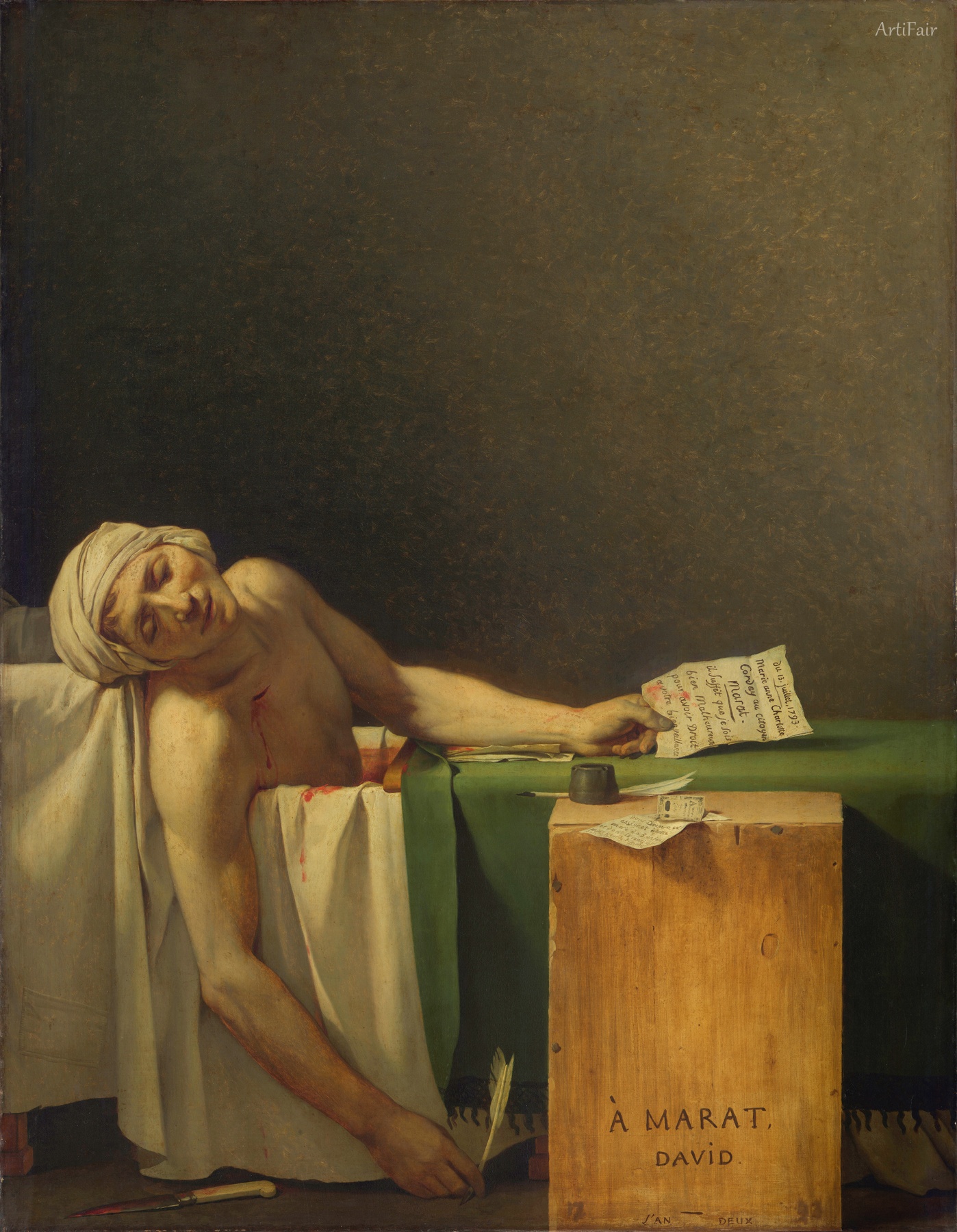
The painting emanates a profound sense of tragedy as it captures the lifeless body of Marat, a key figure of the French Revolution, sprawled across a table. His pale skin contrasts starkly with the dark background, emphasizing the finality of death. David’s masterful use of light highlights the contours of Marat’s body and the bloodied wound on his chest, evoking an immediate emotional response. The crumpled notes around him reveal a narrative, linking his assassination to the Revolutions’ turbulent climate; it’s as if the words themselves, scattered on the table, are crying out for justice.
The composition draws the viewer's eye naturally along the diagonal lines created by Marat's body and the varying textures of the fabric beneath him. The somber green and white cloths symbolize the revolutionary ideals, while the box with ‘À MARAT’ inscribed on it serves as a reminder of his dedication to the cause. David’s deliberate choice of muted colors heightens the emotional intensity, immersing one in a moment frozen in time—capturing both a singular event and the larger historical narrative of sacrifice and loyalty at play during this period.
The Death of Marat
Jacques-Louis DavidCategory:
Created:
1793
Likes:
0
Dimensions:
Download:
2K downloads are free. 4K and Ultra HD files use credits. Public domain artworks can be used for commercial projects.
Public domain download summary
This artwork is provided as a public domain image resource. You can use the free 2K file for everyday creative work, while 4K and Ultra HD files are available with credits.